
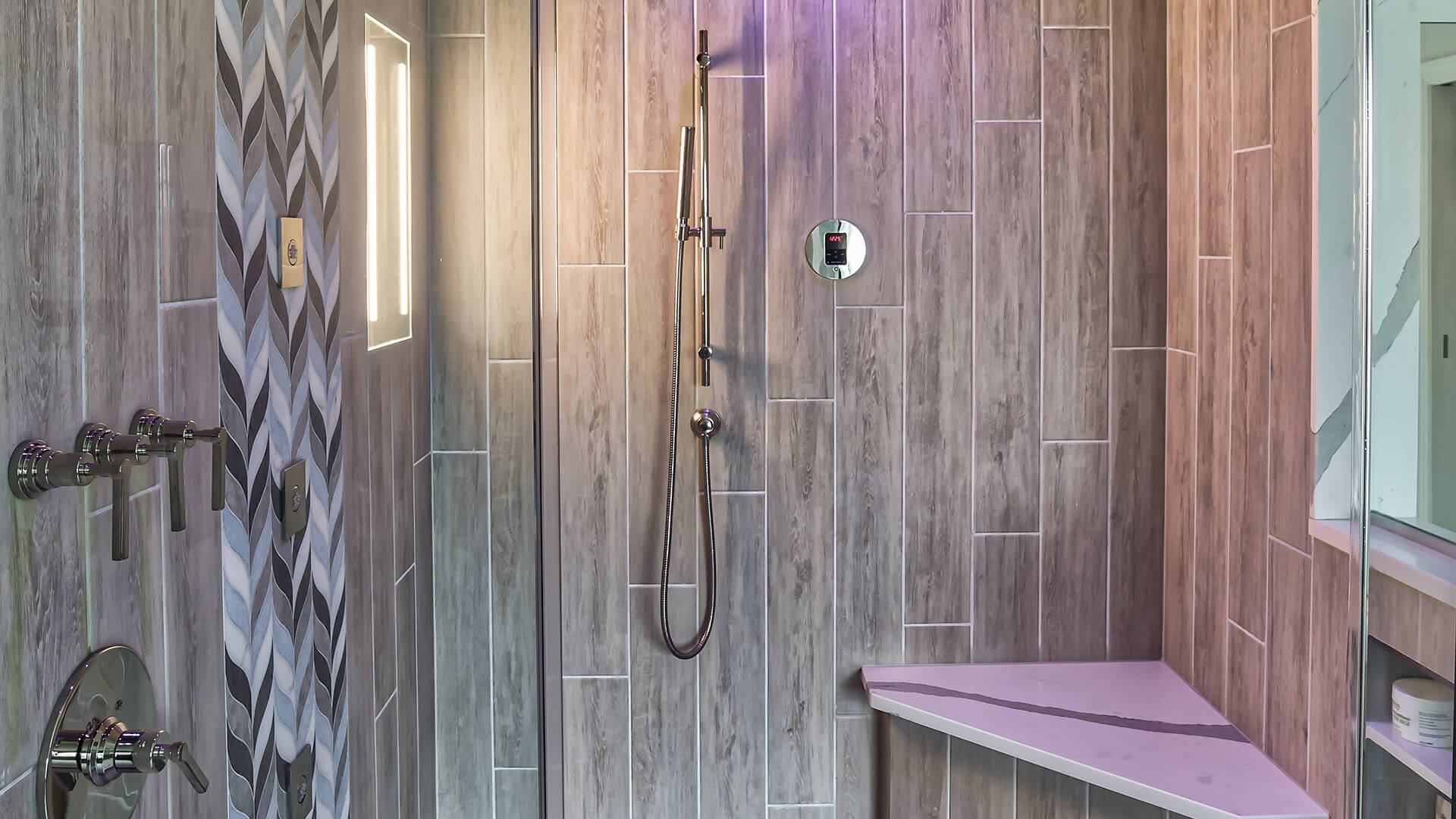
Steam Shower Benefits and Design: What NJ Homeowners Need to Know Before Adding Steam
Steam showers are among the most requested luxury additions in NJ bathroom remodels and among the most technically misunderstood. Homeowners who have experienced steam at a spa know what it feels like. What they are less clear on is what it requires in a residential setting: the generator specification, the room sealing requirements, the electrical demand, and the tile choices that hold up under daily steam exposure. KraftMaster Renovations has been designing and installing steam shower systems across NJ for over a decade, including as a preferred remodeling partner of MrSteam — one of the leading steam system manufacturers in North America. This guide covers what steam actually delivers, how it compares to a sauna, and what it requires to do it correctly.
First appearing on the MrSteam website in 2021, this feature explores how KraftMaster Renovations consistently integrates steam and spa-like features into high-end residential bathroom renovations.
Steam Shower Health and Wellness Benefits
Regular steam shower use delivers a set of physiological benefits that a standard shower does not. The primary ones that NJ homeowners consistently report after installation: respiratory relief steam at 110–115°F opens airways and helps clear congestion in a way that dry heat does not; muscle relaxation the moist heat penetrates more effectively than dry heat for post-exercise recovery or end-of-day stress; skin hydration steam opens pores and is more effective for deep cleansing and moisturizing than a standard shower; and improved sleep quality when used in the evening, as the body temperature drop after leaving a warm steam environment is a documented sleep onset trigger.
The wellness case for a residential steam shower is not anecdotal it is why the feature has migrated from commercial spa settings into high-end residential remodels at an increasing rate. ‘MrSteam’s products allow us to give our clients more than just beautiful spaces we’re giving them tools to relax, recharge, and improve their daily routine,’ notes Bob Gockeler, founder of KraftMaster Renovations.
Steam Shower vs. Sauna How to Choose the Right Wellness Feature for Your NJ Bathroom
The two most common residential wellness features steam shower and sauna deliver overlapping but distinct experiences. Steam operates at lower temperature (110–115°F) with 100% humidity. A sauna operates at higher temperature (150–195°F) with near-zero humidity.
The practical differences: steam is gentler on the respiratory system for most users and more effective for skin hydration; a sauna produces a more intense heat experience preferred by users seeking deeper muscle relaxation or the traditional Nordic sauna effect. The residential installation difference is significant: a steam shower is built into the existing bathroom shower space with the addition of a generator and sealed enclosure no additional room or square footage is required.
A home sauna requires a dedicated room, typically 4×4 feet minimum, with specific ventilation and electrical requirements. For NJ homeowners remodeling an existing bathroom without the floor plan to add a dedicated room, a steam shower is the more practical choice. For those with available square footage and a preference for the dry heat experience, a sauna is the right answer.
What a Steam Shower Requires The Design and Technical Decisions
Steam shower installation involves design decisions that must be made before the shower is tiled not after. The critical requirements: the enclosure must be fully sealed, with a ceiling sloped at minimum 2 inches per foot toward the drain side to prevent steam condensate from dripping on users; the generator is sized by cubic footage of the enclosure (a 4x4x8 foot shower requires a generator of approximately 7–9 kW); the generator is installed outside the shower enclosure typically in a nearby cabinet, closet, or under-vanity space and requires a dedicated 240V electrical circuit; tile selection matters significantly under steam exposure some natural stones absorb moisture and degrade under daily steam conditions, while porcelain and certain sealed stones perform reliably.
The steam head and aromatherapy ports are positioned at the lower half of the shower wall so steam rises through the space rather than dissipating immediately at the ceiling level. KraftMaster coordinates all of these decisions as part of the bathroom remodel design phase, so the steam system is engineered into the shower, not retrofitted into it.
KraftMaster + MrSteam What the Partnership Means for NJ Homeowners
KraftMaster Renovations has been a recognized remodeling partner of MrSteam since 2021, featured in a dedicated case study on MrSteam’s website for our approach to integrating steam and wellness features into high-end NJ bathroom remodels.
That partnership means KraftMaster’s designers have direct access to MrSteam’s technical specifications, product portfolio, and installation support which translates to steam systems that are specified correctly for each project’s enclosure size and client usage pattern.
For NJ homeowners considering a steam shower, working with a contractor who has direct manufacturer partnership eliminates the guesswork in generator sizing and tile compatibility that commonly causes problems in steam installations done without specialized experience.
👉 Read the full case study on MrSteam
Ready to Upgrade Your NJ Home? Let’s Make It Happen!
At Kraftmaster Renovations, we specialize in designing and building custom renovations and additions that combine function, flow, and refined design. Our expert team helps you choose the right layouts and details to transform your dream home into a luxurious reality.
Let our multi-generational family business turn your vision into reality—without the headaches. Stop by our showroom on Main Street in Chatham, grab a coffee, and let’s talk about your kitchen.