
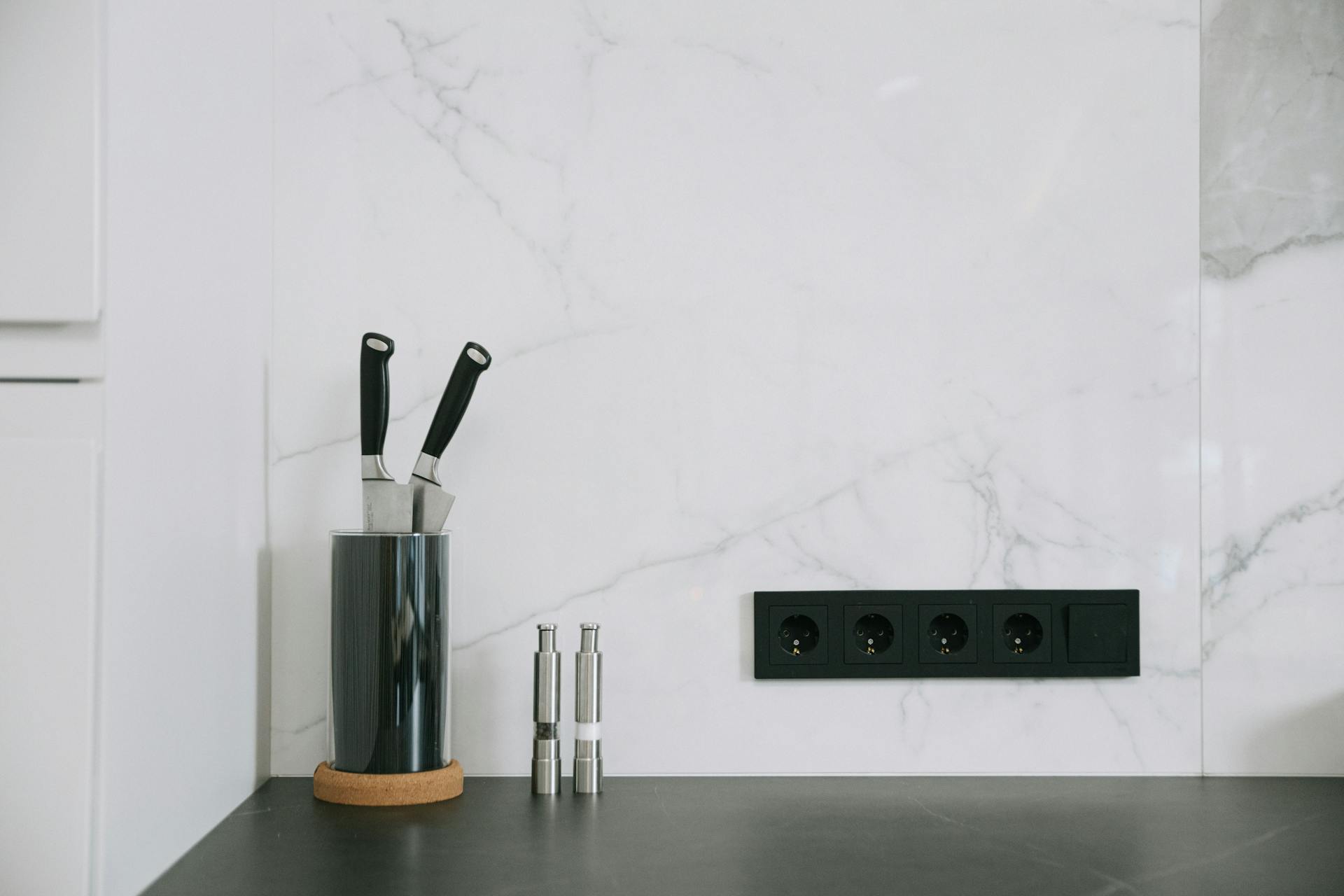
Pop-Up Outlets, Recessed Power Outlets, and Hidden Electrical: Design Solutions for NJ Kitchens
Electrical outlets are a building code requirement every NJ kitchen needs them at specific intervals along the countertop. The question is not whether to have them but how to integrate them into the kitchen design without creating visual interruptions in a backsplash, an island countertop, or a tile pattern that took considerable thought to specify.
Pop-up outlets, recessed outlets, and strategic outlet placement techniques are how KraftMaster resolves this in every NJ kitchen remodel and all of them need to be planned before the electrical rough-in, not after the tile is set.
Pop-Up Electrical Outlets The Island Specification NJ Homeowners Request Most
A pop-up outlet is a countertop-mounted electrical unit that sits flush with the countertop surface when closed and springs up to reveal standard outlets (and often USB-A and USB-C ports) when pressed or opened. In NJ kitchen remodels, pop-up outlets are specified almost exclusively on islands because the island countertop is where homeowners most want power access without a wall outlet interrupting the backsplash or the island panel. The installation requires a hole cut through the countertop and a rough-in electrical box below, positioned during the framing phase before the countertop is installed.
A pop-up outlet specified after the countertop is installed requires the countertop to be removed or a field-cut made significantly more disruptive and more expensive. KraftMaster specifies pop-up outlet locations and quantities during the island design phase, before the countertop is ordered. In granite and quartzite islands, the cut must account for the stone’s natural variation to avoid cracking during the hole installation a detail that requires coordination between the electrician and the fabricator.
Recessed Power Outlets When Flush-Mounted Is the Design-Forward Choice
A recessed power outlet sits inside the countertop surface rather than on the wall the outlet face is set below the countertop edge and covered with a hinged lid that closes flush when not in use. This is distinct from a pop-up outlet: a recessed outlet is designed for countertop edge installation rather than surface installation, and it is commonly specified in islands where a side-mounted access point is preferred over a top-surface pop-up. Recessed outlets in stainless steel or brushed nickel finishes coordinate naturally with hardware and appliance finishes in contemporary NJ kitchens.
Like pop-up outlets, recessed outlets require a rough-in electrical position that is specified during the design phase and coordinated with the countertop fabricator before installation begins.
Hide them in plain sight
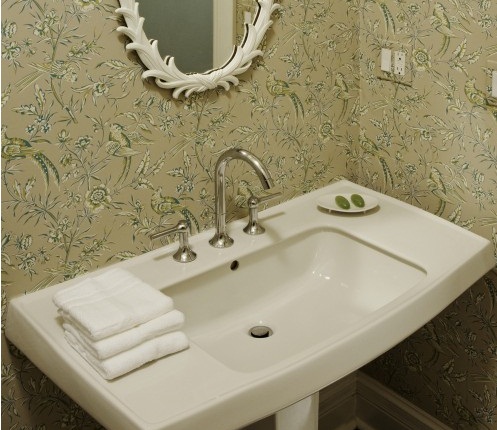
The most cost-effective outlet concealment technique in any NJ kitchen is color matching the outlet device and plate cover to the surface it is mounted on. A white outlet on a white subway tile backsplash is nearly invisible. A bronze outlet and cover on a dark marble backsplash reads as part of the surface.
A stainless steel plate on a metal backsplash disappears entirely. This is a specification decision made during the design phase KraftMaster coordinates outlet color with the backsplash tile selection before any electrical is ordered. An outlet device is a standard item at any electrical supply; the decision is simply whether it is made intentionally or left to default.

Group outlets and plugs to minimize the busy-ness
NJ electrical code requires kitchen countertop outlets at specific intervals typically within 2 feet of any countertop section and with no more than 4 feet between outlet locations. Rather than distributing this requirement randomly along the backsplash, KraftMaster groups the required outlets at locations that serve the household’s actual appliance use patterns near the coffee station, near the primary prep zone, near the charging area and coordinates the plate cover size and finish to work with the tile module.
A grouped outlet cluster at the right backsplash location can be sized to align with the tile joint pattern, making it a geometric element rather than a visual interruption.
Outlet Orientation Horizontal vs. Vertical in Tile Applications
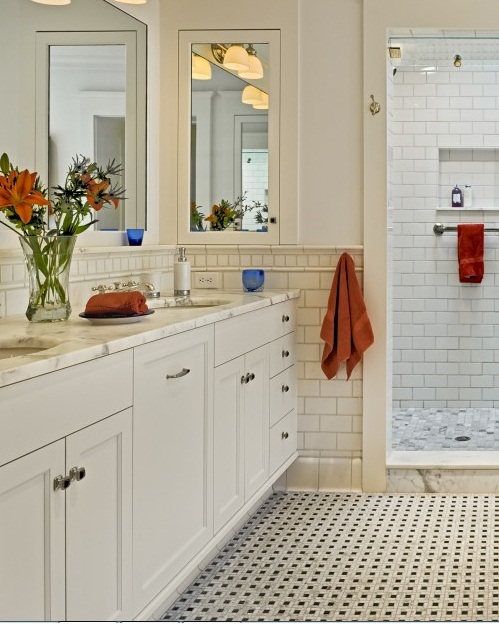
In tile backsplash applications where the tile module is horizontal (subway tile, horizontal large-format), turning the outlet plate to a horizontal orientation aligns it with the tile joints and reduces its visual impact. This is coordinated between the electrician and the tile setter during installation planning it is a detail that costs nothing if it is planned and cannot be easily changed after the tile is set.
In a kitchen, moving the outlets to a lower, horizontal position helps keep them out of the design-critical parts of the backsplash. And because you won’t have long cords snaking up to a higher plug, they’ll be mostly out of sight when in use.

Specify a special plate cover to match other design elements
My mom always said, “If you can’t fix it, feature it.” That is the exact sentiment behind the decision to use sleek stainless-steel plate covers for the switches and outlets in this contemporary kitchen.
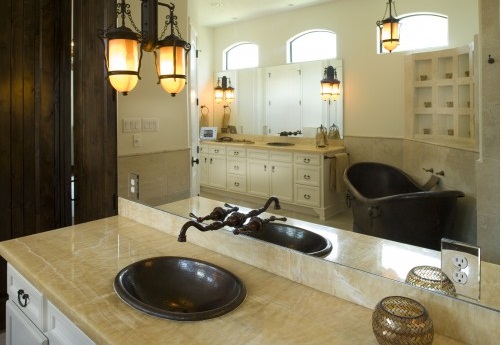
Mirrored plate covers make these outlets almost disappear.
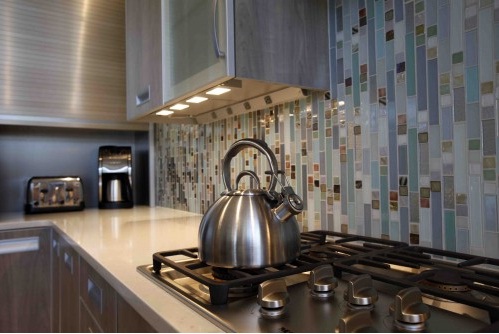
Under-Cabinet Outlet Strips The Clean Backsplash Solution
Running a hardwired outlet strip behind the under-cabinet lighting eliminates backsplash outlets entirely for the countertop zone. The strip is concealed by the cabinet bottom and the under-cabinet light trim, making it invisible in normal use. Cords from countertop appliances run up the back of the counter and plug into the strip shorter cord runs and no visible outlet faces on the backsplash.
This configuration requires a dedicated electrical circuit for the under-cabinet zone (separate from the lighting circuit) and is planned during the rough-in phase. KraftMaster specifies under-cabinet outlet strips as the primary electrical solution in kitchens where an uninterrupted backsplash tile pattern is a design priority.
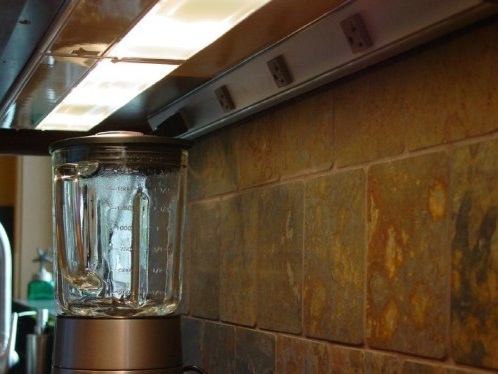
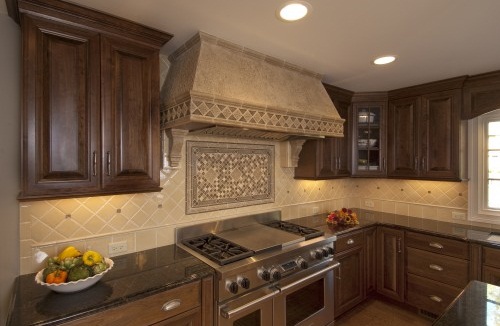
This picture shows the true value of the under-cabinet outlet location. Any plug or switch in the middle of this gorgeous mosaic tile would just ruin the pattern and take away from the overall design.
Pop-up outlets, recessed outlets, color-matched covers, and under-cabinet power strips—these aren’t afterthoughts. They are standard considerations in the KraftMaster kitchen design process.
We map out these details during the electrical rough-in planning phase long before the first tile is set or a single countertop is ordered.
Why does timing matter?
- Getting it right now: Costs absolutely nothing extra.
- Fixing it later: Altering electrical placements after installation is a frustrating, messy, and significantly more expensive correction.
Don’t let messy outlet placement ruin your beautiful new kitchen. Let’s plan it perfectly from the start.
Want a kitchen that’s beautiful down to the very last detail? KraftMaster serves homeowners across NJ.