
Kitchen cabinet prices and tariffs in NJ: what’s driving costs and how to protect your budget (2026 update)
As of September 2026, kitchen cabinets cost more mainly because of a 25% federal Section 232 tariff on imported kitchen cabinets, vanities and cabinet components, scheduled to rise to 50% on January 1, 2027. American-made cabinets are affected too, because much of their hardware and many components are imported. The best protection for your budget is to settle the layout and cabinet selections early, before demolition, so pricing and lead times are built into the plan.
Current cabinet tariffs and pricing (as of September 2026)
- Tariff: 25% on imported kitchen cabinets, vanities and cabinet components under Section 232, in effect since October 2025.
- Scheduled change: an increase to 50%, originally set for January 1, 2026, was postponed. It is currently scheduled for January 1, 2027.
- KraftMaster kitchen remodel ranges by cabinet level in Morris, Union and Essex counties, appliances excluded:
- Painted standard cabinets, roughly 10 to 14 cabinets, existing layout: $100,000 to $125,000
- Painted semi-custom cabinets, roughly 15 to 20 cabinets: $125,000 to $175,000
- Painted inset cabinets, roughly 24 to 28 cabinets, with layout changes: $175,000 to $275,000 or more
For the full breakdown, see our guide to kitchen remodel costs in New Jersey.
Why tariffs raise cabinet prices, even on American-made cabinets
Cabinetry has always been one of the largest investments in a kitchen remodel. Tariffs put that investment under extra pressure, and changes affecting other imported materials and metals add another layer of complexity to sourcing.
Tariffs matter even if your cabinets are made in the United States. Cabinet manufacturing runs on an interconnected supply chain. Wood products, hinges, drawer slides, specialty hardware and finishing materials may come from different countries, even when the final cabinet is built here.
Labor is part of the equation too. Custom and semi-custom cabinetry takes design, engineering, manufacturing, finishing and skilled installation, because the cabinets have to fit precisely with appliances, countertops, lighting, plumbing and architectural details.
Higher cabinet prices don’t mean homeowners have lost control of their budgets. They mean cabinet decisions need to be made earlier and more strategically: the manufacturer, door style, finish, construction, hardware, interior accessories and, most of all, how the whole project is organized.
So don’t look at cabinet price as an isolated number. Look at what you’re actually getting, where it comes from, how it fits the design and what alternatives could accomplish the same goal if pricing changes.
Stock vs. semi-custom vs. custom cabinets: what each is really for
Homeowners often assume cabinet categories are mainly about quality. The real difference is usually flexibility.
Stock cabinets come in set sizes, configurations, door styles and finishes. They make sense when the room works well with standard dimensions and the design doesn’t need much customization.
Semi-custom cabinets offer considerably more flexibility. Depending on the manufacturer, you get more choices in dimensions, finishes, door profiles, storage features and modifications. For most kitchen renovations, this is where design flexibility and investment meet best.
Custom cabinetry gives the designer far more control over dimensions, materials, finishes and details. That becomes valuable when the architecture dictates the cabinetry instead of the other way around.
Older New Jersey kitchens are a good example of why you may need semi-custom or custom work. Walls may not be square. Ceiling heights can vary. Existing openings, windows and trim can create awkward dimensions. Or the new design may call for cabinetry that looks built into the house rather than assembled from a catalog of standard boxes.
In those situations, custom cabinetry isn’t just an aesthetic upgrade. It solves a design problem.
That’s why comparing stock, semi-custom and custom cabinets on price alone rarely tells you which one makes sense for your kitchen. The better question: how much customization does the design actually require?
Where we find value without giving up quality
Keeping a kitchen budget under control doesn’t mean hunting for the cheapest cabinet.
It means knowing which choices improve the finished kitchen and which ones add cost without adding much value for that particular homeowner.
To make that call, we need to understand how the kitchen has to work. Do you cook every day? Do two people cook at the same time? Does the island need to work as a table or as prep space? Which appliances should disappear behind cabinet panels, and which should stay visible?
Those answers show where customization matters.
From there, dozens of smaller decisions move the cabinet investment up or down. The biggest ones:
- Door profile
- Finish
- Interior fittings and storage accessories
- Hardware
- The number of cabinets and special sizes
Sometimes semi-custom cabinetry can do almost everything the design requires. In another kitchen, paying for true custom work in one difficult area is money well spent.
This is where access to several manufacturers, and knowing their product lines, pays off. Our proposals name the baseline cabinet manufacturer and line, so you know exactly what’s included, and the price adjusts if your final selections change.
How our planning process protects your budget
A cabinet problem discovered during construction is never just a cabinet problem.
Say the cabinets arrive late. Countertop templating has to move, which pushes fabrication. Plumbing fixture installation moves. The backsplash can’t be finished. Electrical finish work gets rescheduled.
One late decision ripples through the whole project.
That’s the main reason we believe major selections should be settled before demolition begins.
At KraftMaster, design, selections, ordering, construction and scheduling are connected. Once you make a selection, our team handles what comes next. We calculate quantities, account for lead times, coordinate orders and deliveries, inspect products when they arrive and deal with the supplier on anything damaged or incorrect.
We won’t promise a project will never change. Homeowners sometimes decide to upgrade an appliance, add cabinetry or expand the scope as the design develops. Existing conditions can also reveal issues nobody could reasonably have known in advance.
The difference is between a budget that changes because you chose to change the project, and a budget that changes because important decisions were never made in the first place.
Our process is built to eliminate the second kind.
That approach runs through every step of our Design-Build process.
What our custom cabinetry work looks like in NJ homes
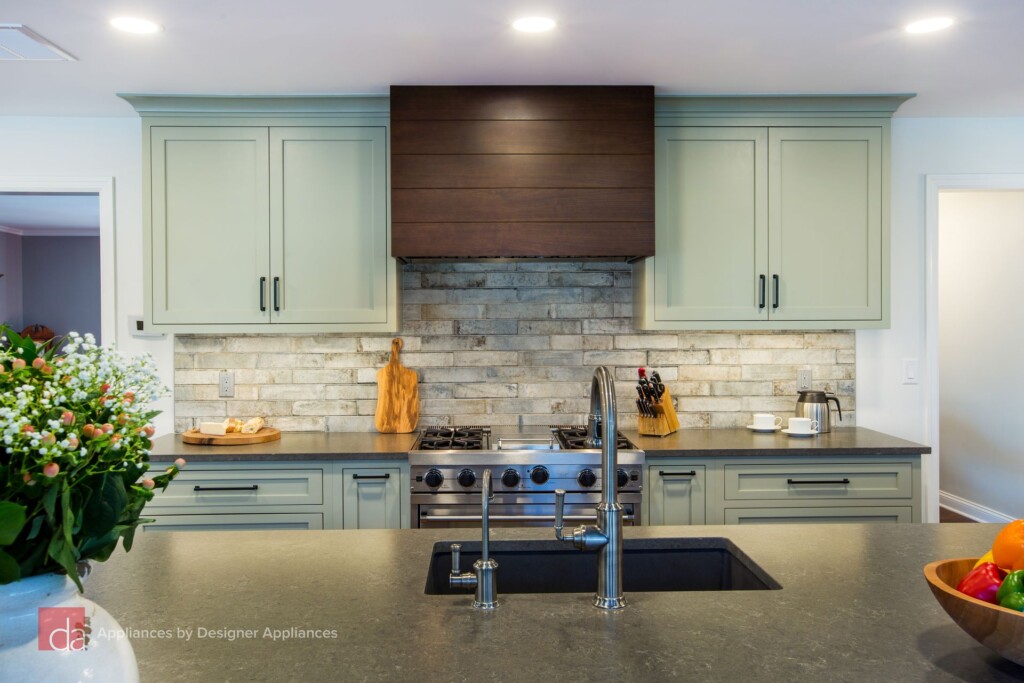
Custom kitchen remodeling in New Jersey usually means working with the house, not just replacing what’s there.
That’s especially true in the established communities we work in across Morris, Union and Essex counties, where a renovation often means creating a more functional kitchen without making it feel disconnected from the rest of the home.
A cabinet plan may need to respond to existing trim, windows, ceiling conditions or adjoining rooms. Removing a wall changes how the cabinets relate to the dining or living space. Moving appliances affects electrical, plumbing and ventilation. An island that looks perfect on a floor plan still needs proper clearances and room to move around it.
So cabinetry is designed as part of the room, not picked after the room is designed.
In some kitchens, the right answer is a restrained perimeter with a highly customized island. In others, floor-to-ceiling cabinets solve storage problems and create a cleaner look. Cabinetry can also hide appliances, build in a beverage station or create storage around an awkward structural condition.
What matters is that those decisions get made together.
KraftMaster has been remodeling New Jersey homes from our base in Chatham since 2008, with kitchens throughout Morris, Union and Essex counties. We’ve seen how fast a seemingly simple cabinet decision can affect the rest of a renovation.
That’s one reason our design and construction teams work as one process, instead of one company handing a finished cabinet plan to another.
Getting the cabinetry right: our recommendations
Make cabinetry one of your first major selections, not your last.
Start with the layout before you fall in love with a door style. The best-looking cabinets won’t fix poor circulation, too little prep space or an island that’s too big for the room.
Set an overall kitchen budget before designing every wish-list feature into the space. That gives your designer a framework for deciding where custom work adds real value and where a simpler solution makes more sense.
Ask about lead times early. Availability varies by manufacturer, finish and level of customization. A beautiful product that can’t arrive when the project needs it creates problems far beyond the cabinet line.
Make appliance decisions early too. Refrigerators, ranges, wall ovens, microwaves, ventilation and specialty appliances all affect cabinet dimensions and clearances.
Don’t evaluate cabinetry on its own. Countertops, flooring, lighting, hardware, backsplash, appliances and cabinets need to work visually and technically as one system.
If your project uses imported cabinetry, check the current tariff status above and factor any scheduled changes into your timeline.
Rising cabinet prices make planning more important, not less
Homeowners can’t control every factor behind the price of a renovation. What you can control is how prepared your project is to respond.
For us, keeping a kitchen project financially disciplined doesn’t mean chasing the lowest cabinet price. It means understanding your priorities, setting a realistic budget, making selections early and coordinating purchasing with the construction schedule.
That’s how we approach custom kitchen remodeling at KraftMaster.
If you’re considering a kitchen remodel in New Jersey, schedule a consultation with our team in Chatham to talk through your kitchen, your priorities and your budget.
Reviewed by Bob Gockeler, CR, CKBR
Ready to Reimagine Your Kitchen? Let’s Make It Happen!
At KraftMaster Renovations, we specialize in designing and building custom kitchens that combine function, flow, and refined design. Our team helps you choose the right layout, materials, and details to deliver the perfect, high-end kitchen.
Book a visit to our showroom on Main Street in Chatham, grab a coffee, and let’s talk about your kitchen.
Frequently asked questions
Why are kitchen cabinets more expensive right now?
As of September 2026, the main driver is a 25% federal Section 232 tariff on imported kitchen cabinets, vanities and cabinet components, in effect since October 2025. Imported hardware, finishing materials and labor costs add to it.
Is the kitchen cabinet tariff going up to 50%?
As of September 2026, yes, it is scheduled to. The increase to 50% was originally set for January 1, 2026, then postponed to January 1, 2027.
Are American-made cabinets affected by tariffs?
Indirectly, yes. Cabinets built in the U.S. often use imported hinges, drawer slides, hardware and other components, so domestic cabinet prices can rise too.
Should I order cabinets before a tariff increase?
Don’t rush a remodel because of a tariff date. Cabinets should be ordered when the design is final and timed to your construction schedule. If you’re already planning a kitchen, starting design early gives you time to make selections and lock in pricing on a realistic timeline.
Do I need stock, semi-custom or custom cabinets?
It depends on the room. Stock cabinets work when standard sizes fit the space. Semi-custom cabinets suit most renovations. Custom cabinetry makes sense when the house has out-of-square walls, uneven ceilings or architectural details that standard sizes can’t handle.
How much does a kitchen remodel with new cabinets cost in New Jersey?
As of September 2026, KraftMaster’s full-service design-build kitchens run $100,000 to $125,000 for a functional refresh with standard cabinets, $125,000 to $175,000 for a full remodel with semi-custom cabinets, and $175,000 to $275,000 or more for a premium kitchen with inset cabinets and layout changes. These figures exclude appliances.