
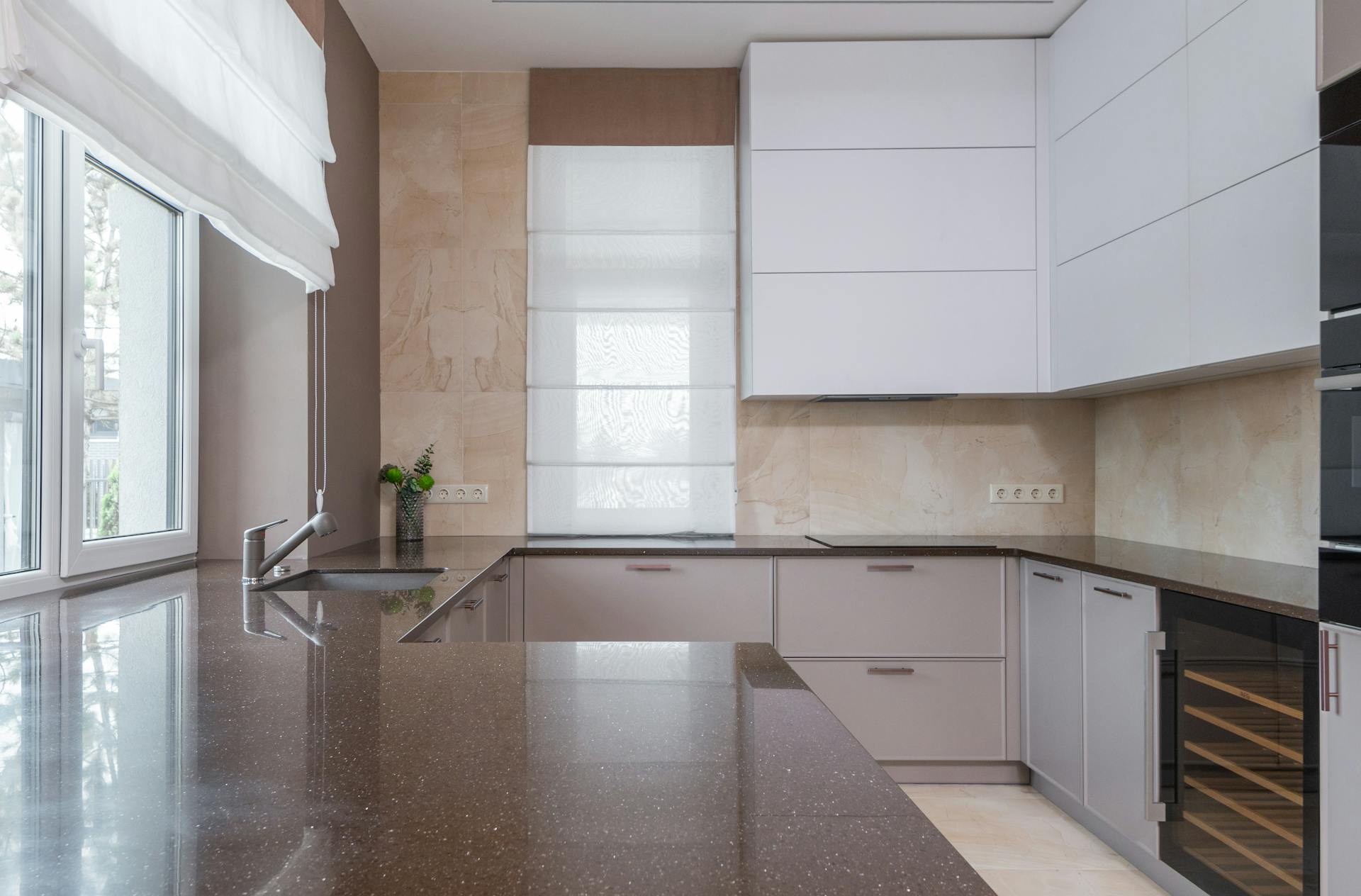
How to Care for Your Countertops After a NJ Remodel: Quartz, Granite, and Marble Guide
The most common countertop maintenance mistake NJ homeowners make is treating all materials the same. Quartz is not granite. Granite is not marble. Each material has a different porosity, a different chemical sensitivity, and a different sealing requirement and the cleaning product that is safe on one can permanently etch or dull another. This guide covers the care protocol for the three countertop materials KraftMaster specifies most frequently in NJ kitchen and bathroom remodels: quartz, granite, and marble/quartzite.
Quartz Countertop Care
Quartz countertops are non-porous and do not require sealing ever. This is one of the primary practical advantages of quartz over natural stone, and one of the reasons KraftMaster recommends it for NJ households with heavy daily kitchen use. Daily cleaning: warm water and a small amount of dish soap on a microfiber cloth is sufficient for routine cleaning. Avoid: abrasive scrubbers, bleach-based cleaners, and any cleaner containing hydrofluoric acid (found in some bathroom tile cleaners) these will damage the resin binder that gives quartz its surface durability. Heat: quartz is more vulnerable to thermal shock than its hardness suggests.
A hot pan placed directly on the surface can cause discoloration or cracking at the seam between the stone and resin. Always use trivets. Cutting: use a cutting board not because quartz will scratch easily, but because quartz is hard enough to dull your knives faster than any other surface.
Granite Countertop Care Sealing Schedule and Daily Maintenance
Unlike quartz, granite is a natural stone with varying porosity meaning it will absorb liquids if not properly sealed. The sealing question KraftMaster clients ask most often: how often? The answer depends on the granite’s density and color. Darker granites (black, dark green, dark brown) are typically denser and less porous they may only require sealing every 3–5 years. Lighter granites (white, beige, light grey) are more porous and typically require sealing every 12–18 months. The water test: pour a tablespoon of water on the countertop.
If it beads up after 5 minutes, the seal is intact. If it darkens the stone, it is time to reseal. How to seal granite: clean the surface thoroughly and allow it to dry completely; apply a penetrating stone sealer evenly with a clean cloth; let it sit for the product’s specified dwell time (usually 15–20 minutes); wipe off the excess before it hazes; repeat if the water test still shows absorption after 24 hours. For daily cleaning: pH-neutral stone cleaner or warm water not vinegar, not citrus-based cleaners, not bleach. Acidic cleaners etch the surface and degrade the sealant.
Marble and Quartzite Care The Most Misunderstood Countertop Materials in NJ Remodels
Marble and quartzite are the countertop materials that require the most homeowner education at the time of installation because they perform beautifully when cared for correctly and visibly poorly when treated like quartz or granite. Marble is calcium carbonate and reacts chemically with acids. Wine, lemon juice, vinegar, tomato-based sauces, and standard household cleaners will etch the surface removing the polish and leaving a dull mark that is not a stain but a surface change.
Etching cannot be cleaned away; it requires professional re-honing. To minimize etching: wipe spills immediately (including water), use trivets and cutting boards, and seal marble every 6–12 months with a penetrating impregnating sealer. Quartzite is often confused with quartz (which is engineered) but is a natural stone that is significantly harder than marble and more acid-resistant. Care requirements are similar to granite. KraftMaster clarifies the marble vs. quartzite distinction at the material selection stage because the maintenance commitment is a legitimate factor in the decision.
Caulk, Not Grout Why the Seam Behind Your Countertop Needs Annual Inspection.
When your new countertop meets the wall or the backsplash, the seam must be sealed properly to protect your investment. However, this is one critical area where grout simply will not work. Homes settle, and building materials naturally expand and contract, especially in NJ, where significant winter temperature swings are a reality. In local communities like Millburn, Florham Park, and West Orange, these seasonal shifts cause minute, natural movements in your home’s structure.
To account for this movement, KraftMaster uses a premium, flexible silicone caulk that is perfectly color-matched to your countertop. We apply this at every countertop-to-wall and countertop-to-backsplash seam. Unlike rigid grout, which will crack under pressure, silicone flexes with the structural shifts of your home, maintaining a watertight barrier.
If you’d like to learn more about keeping your countertops in great shape, and other ways you can maintain your New Jersey remodel, give our team at KraftMaster Renovations a call at 908-517-5581. You can also contact us through our online form. Thank you.